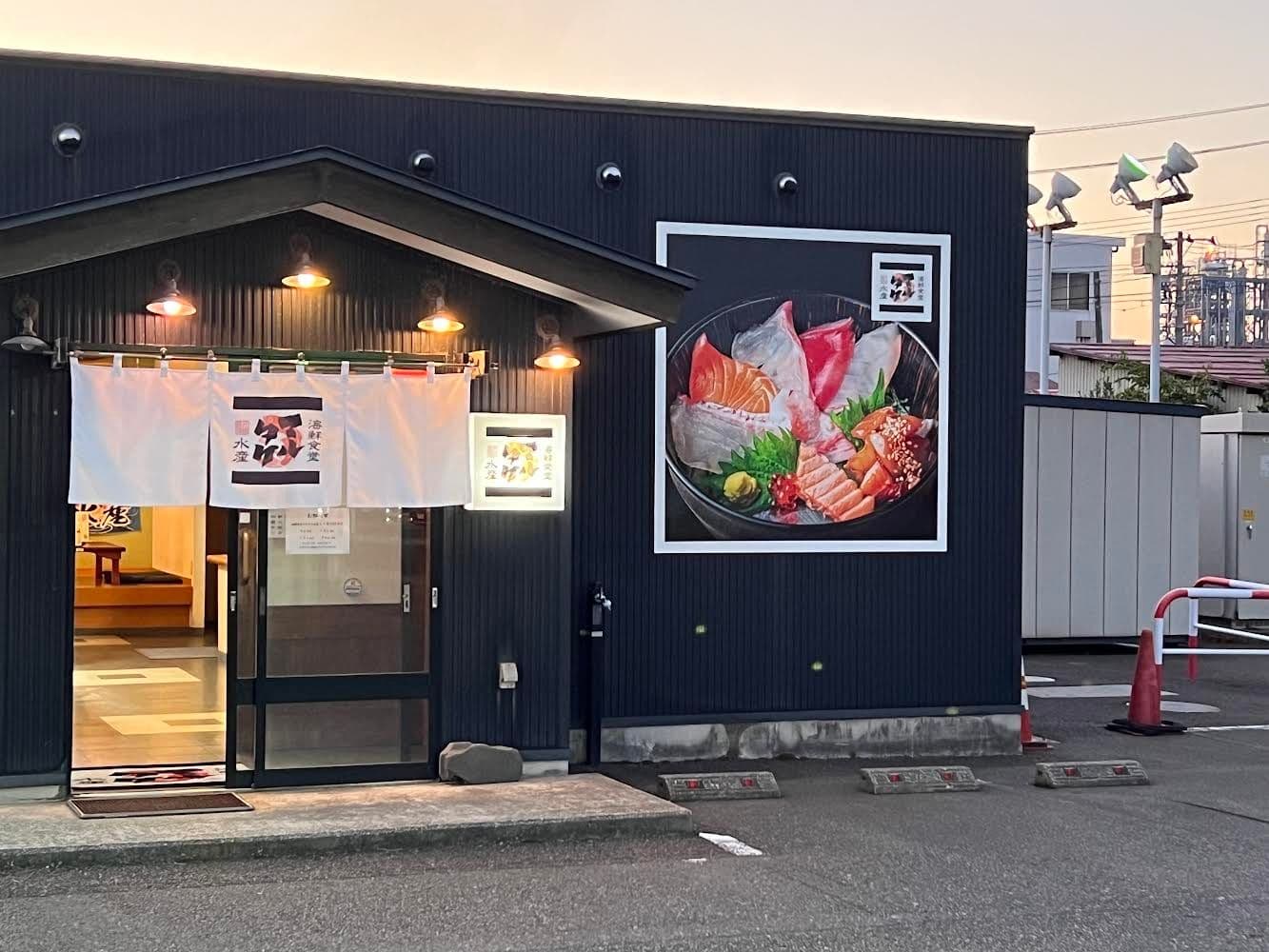
The key to management is how to provide good meals and service with limited resources. By introducing a self-ordering system, a path to survival is being found for individually run businesses in rural areas (Seafood Diner Marutake Suisan).
This time, we spoke with Mr. Takeshi Endo, owner of the newly opened restaurant “Kaisen Shokudo Marutake Suisan” in Joetsu City, Niigata Prefecture.
Drawing on his experience building a career as an employee in Tokyo’s food and beverage industry, Mr. Endo came to appreciate the convenience of self-order systems and felt that implementing such a system was essential when going independent.
The deciding factors were the initial investment cost and the speed of operation, so as an independent owner he had no hesitation in introducing the Respo self-order system. We asked him about his thoughts on going independent after relocating his base of operations from Tokyo to Niigata, as well as how he makes use of the Respo self-order system.
Creation date: 2023年11月7日
Update date: 2026年2月26日

Table of contents
Committed to local production for local consumption, shifting our base of activities from Tokyo to Niigata
— Could you tell me about your shop?
We opened in August 2023. At lunchtime, we serve seafood rice bowls and set meals made with local fish landed at Nō Fishing Port and Itoigawa’s fishing ports, while in the evening we operate as an izakaya, offering à la carte dishes, kushikatsu (deep-fried skewers), and local Niigata sake.
I had been working for a company that runs restaurants in Tokyo for many years, but things changed when a childhood friend told me they were looking for someone to open a place back home in Niigata. This location used to be a soba noodle shop, and they were apparently looking for a new tenant after it closed. I took it as a sign that the timing was right and made the bold decision to move back. It was actually the first time in about 30 years that I’d returned to live in my hometown.
In the past, since I belonged to a company, my role was what you’d call “store operations,” such as managing sales at the stores I was in charge of and handling staff shift schedules. But since becoming independent, I do everything by myself—HR, accounting, general affairs, management, and more. Even though it’s the same line of business as before, it feels completely different now.
— You mentioned that being involved in management now feels “completely different” from when you worked at a restaurant in Tokyo. Are there any other differences you’ve noticed?
Let me see. There are lots of things, but first of all, the number of people is different, right?
In Tokyo’s entertainment districts, it’s not unusual for customers to visit in large groups, but this area is surrounded by offices and residential neighborhoods and is located along a major road. Because of that, during the day we mostly get one or two people at a time, usually local residents or people working at nearby offices. At night, most of our customers are guests staying at the adjacent business hotel, and compared to daytime, they tend to be younger and include many visitors from more distant areas.
I run the place with just one part-time worker and myself, and I’ve come to realize that in a privately owned business, the key to management is how you can provide good food and service with limited manpower.
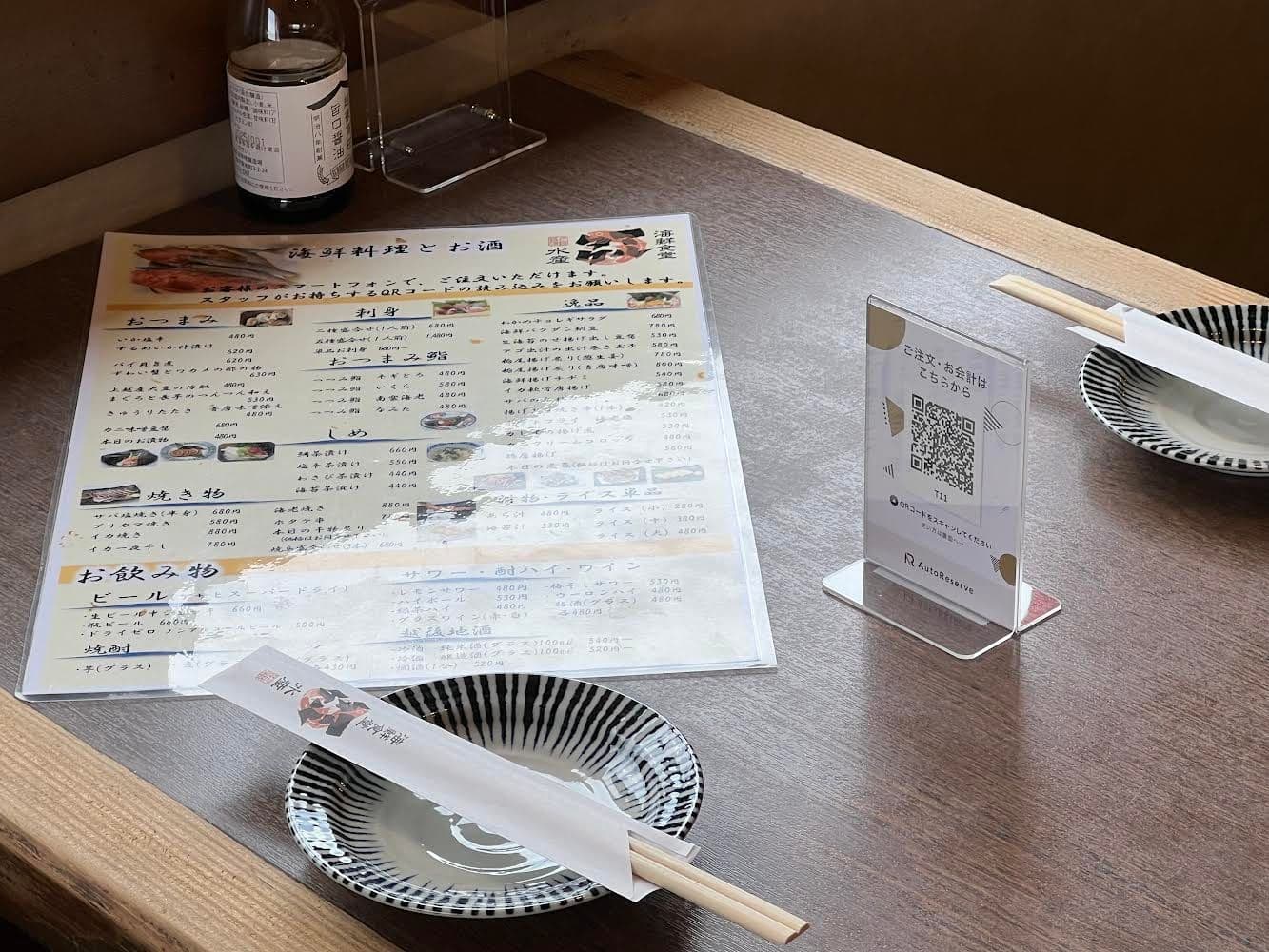
The deciding factors for introducing AutoReserve were its low cost and its simple, speedy operation.
— Please tell us why you decided to introduce Respo Self-Order from the very beginning of your store’s opening.
When I was getting ready to open the restaurant, I had decided from the beginning to introduce some kind of self-ordering system. I chose the Respo self-order system because its usability and cost were just what I had in mind.
At my previous workplace, each table had its own dedicated terminal, and we used a system that allowed customers to place orders and pay from their seats themselves, and also let us manage performance using iPads, so I had already experienced how convenient it was.
On the other hand, when it comes to introducing a large-scale system, the initial investment is simply too big for an independently run business. When you first open a store, you have to be very careful about how you use your limited funds, and in that respect Respo Self-Order keeps the initial costs down, so there was no hesitation from a functionality standpoint either.
We didn’t even consider other companies for comparison; Respo Self-Order was our only choice.
— Please tell us what has been good about introducing Respo Self-Order.
Isn’t the speed of the self-order system, which lets customers place orders and pay whenever they like, something truly irreplaceable?
Because the waiting time until ordering is reduced and we need fewer staff, it naturally creates more opportunities to talk with customers. We can ask where they’re visiting from or what kind of food they like, and sometimes they ask us for recommended dishes and place additional orders based on that.
Because everything is paperless, order and billing mistakes are eliminated, and it’s been a huge help for us.
It’s been about three months since we introduced it from the opening, and we have no concerns about the running costs either.
To tell the truth, when we were still preparing to open, friends and others around us were worried about introducing a self-order system, saying things like, “On top of running the restaurant, will you really be able to handle a system that requires operating terminals?” But in the end, those worries turned out to be completely unnecessary (laughs).
--- How do you feel about the usability of the Respo self-order system?
I think the system’s strength is how easy it is to use. Lately, whenever I come up with a new menu item, I often use the feature that lets me freely add products myself from the POS register screen.
I think the system’s strength is how easy it is to use. Lately, whenever I come up with a new menu item, I often use the feature that lets me freely add products myself from the POS register screen.
In the system at my previous workplace, when we wanted to add a new menu item to the dedicated terminals, it took a lot of time and effort: we had to first send a request form to the system management company, exchange data with them, and then carry out confirmation work. Now, however, we can make changes whenever the idea comes to us and complete everything on the spot. It’s very convenient because we can use short breaks, like the time after lunch service while we’re preparing for dinner.
I’ve never had any trouble with how it operates, since it’s intuitive to use, and before I knew it I’d gotten used to it just by using it. Speaking of which, the other day I contacted support for the first time because I didn’t know how to apply a specific discount in the accounting section, but I got a reply from the support representative right away and the issue was resolved smoothly.
Small, independently run shops in particular can gain major benefits from using self-ordering systems.
— How have your customers been reacting?
Since many of our lunchtime customers are elderly, it’s not uncommon for people who are seeing the self-order system for the first time, or who feel it looks difficult or don’t really understand it, to hesitate. So after we take their order, we enter it on the POS register screen ourselves.
I feel there is still plenty of room to make better use of this kind of lunchtime arrangement going forward.
The number of people who prefer online payments is gradually increasing, so it would be great if we could encourage interest through things like QR codes on the table and lead that interest to actual use.
During dinner time, we do occasionally get customers who’ve had a bit too much to drink and ask us to place their orders for them (lol), but otherwise we make full use of the Respo self-ordering system.
Regarding payment, many customers prefer to pay online at the table, and so far they have been able to use the system without any issues operating it.
— Finally, could you share a message for those who are currently considering Respo Self-Order?
I hear that labor shortages in rural areas, except for some urban centers like Tokyo, are severe, and it’s not uncommon for part-time job postings to receive no applications for a long time.
Given the limited operating funds, staff, and time, I believe there are significant advantages for similarly small, owner-operated shops in introducing a self-ordering system.
To expand sales channels, we are also considering online orders and the use of a food truck.
Lastly, could you tell us about your future goals or plans?
We’re currently considering offering takeout and selling from a food truck in the future.
As for the kitchen car, it has now been ordered and has entered the painting stage.
We still offer takeout, but since we only start preparing orders after customers place them at the counter and then have them wait for their takeout, it inevitably takes some time before the order is ready. Going forward, it would be great if we could accept orders online in advance and then hand them over at the storefront or food truck.
Our kitchen car will be delivered soon, so to start with, we’re planning to park it in front of the shop as a form of promotion, sell items at the storefront, and use that time to explore future sales channels.
Our short-term goal is to increase local sales channels, such as at roadside stations, and during the summer vacation season at nearby beaches with panoramic views of the Sea of Japan.
As a long-term goal, I’d like to open a Tokyo branch of the seafood restaurant Marutake Suisan.
Store Information
Kaisen Shokudo Marutake Suisan
Address: 650-1 Nishifukushima, Kubiki-ku, Joetsu City, Niigata Prefecture
Phone number: 025-530-7794
Store details:https://autoreserve.com/restaurants/MJCkDAaPFfWSWaxaEuWu
Phone number: 025-530-7794
Store details:https://autoreserve.com/restaurants/MJCkDAaPFfWSWaxaEuWu