In an unpredictable situation, we introduced self-ordering in place of staff. This helped reduce customer stress caused by waiting times. (Ethnic Tavern Backyard)
This time, we spoke with Mr. Yoshikawa, the owner of “Ethnic Tavern Backyard” located in Setagaya Ward, Tokyo. After reopening with a renewal in the post‑COVID period, it became difficult to forecast sales, so they introduced Respo Self-Order to reduce the operational workload as much as possible through a system. We asked him about why he chose Respo Self-Order and what has changed since its implementation.
Creation date: 2023年7月26日
Update date: 2026年2月26日

Table of contents
The low initial cost was the deciding factor. Implemented with future solo operation in mind.
— Please tell us about your restaurant.
We’re a restaurant that serves ethnic cuisine in an izakaya style. Our menu focuses on Thai and Mexican dishes, and we also offer small plates of German and Argentine cuisine. Our specialty is Southeast Asian skewers. We have items like “Moo Ping,” a famous Thai grilled pork skewer, as well as chicken skewers eaten with peanut sauce, such as “Gai Satay” and “Moo Satay.”
We’re a restaurant that serves ethnic cuisine in an izakaya style. Our menu focuses on Thai and Mexican dishes, and we also offer small plates of German and Argentine cuisine. Our specialty is Southeast Asian skewers. We have items like “Moo Ping,” a famous Thai grilled pork skewer, as well as chicken skewers eaten with peanut sauce, such as “Gai Satay” and “Moo Satay.”
I originally ran a Thai restaurant and a Thai lunchbox business with a kitchen car for 16 years, but I took a break during the COVID-19 pandemic and then reopened after a renewal in April this year (2023).
— What kind of customers visit your shop?
We welcome a wide variety of people, regardless of age or gender. We get families of four or five, pairs of customers, and people coming on their own, so the group sizes are quite diverse.
We welcome a wide variety of people, regardless of age or gender. We get families of four or five, pairs of customers, and people coming on their own, so the group sizes are quite diverse.
— Please tell us why you decided to introduce Respo Self-Order.
While we’re taking an order, it’s very common for another table to call out “Excuse me!” and place an order at the same time. And right after we reopened following renovations, it was hard to predict how much we could afford to spend on labor costs in terms of sales and from a long‑term perspective. We thought that with a self-ordering system we could introduce it at a low cost and streamline our operations, so we decided to implement it.
While we’re taking an order, it’s very common for another table to call out “Excuse me!” and place an order at the same time. And right after we reopened following renovations, it was hard to predict how much we could afford to spend on labor costs in terms of sales and from a long‑term perspective. We thought that with a self-ordering system we could introduce it at a low cost and streamline our operations, so we decided to implement it.
What made Respo Self-Order appealing was its low initial cost compared to other services. With other services, self-ordering itself is often treated as an optional feature with additional fees, and I believe some required several hundred thousand yen upfront for equipment and installation costs.
Reducing customer waiting time also leads to more repeat visits
--- After introducing Respo Self-Order, how has it actually felt to use?
It’s convenient that we don’t have to go to the customer’s table; the order details print out directly from the kitchen printer, and we can check the order history for all tables on the iPad. Also, the online payment feature is extremely useful. Even when several tables want to pay at the same time, if they’re paying by credit card or PayPay, we can complete the payment on the customer’s own device without going through the register, so we don’t keep them waiting. Especially with PayPay, there’s no need to enter a card number like with credit cards, so most customers tend to choose that option.
It’s convenient that we don’t have to go to the customer’s table; the order details print out directly from the kitchen printer, and we can check the order history for all tables on the iPad. Also, the online payment feature is extremely useful. Even when several tables want to pay at the same time, if they’re paying by credit card or PayPay, we can complete the payment on the customer’s own device without going through the register, so we don’t keep them waiting. Especially with PayPay, there’s no need to enter a card number like with credit cards, so most customers tend to choose that option.
It was my first time using a self-order system, but whenever I wasn’t sure about something I could immediately check with the support staff, so I didn’t really have any problems.
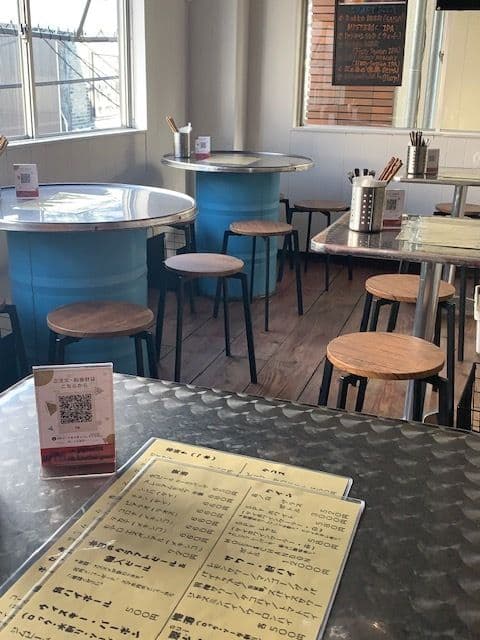
— Have there been any changes in terms of operations?
From time to time we have part-time staff who have experience working in restaurants come in for one-off shifts, but of course they’re not familiar with our store or our menu, and they’re not used to our operations either. Because of that, the burden of explaining things tends to fall heavily on the regular part-time staff and on me.
From time to time we have part-time staff who have experience working in restaurants come in for one-off shifts, but of course they’re not familiar with our store or our menu, and they’re not used to our operations either. Because of that, the burden of explaining things tends to fall heavily on the regular part-time staff and on me.
However, thanks to having Respo Self-Order, the workload for taking orders and handling payments has been reduced, so there’s less we need to teach staff, and even those who aren’t very familiar with the store can smoothly guide customers. If we keep customers waiting for ordering or payment, it can sometimes lead to a poor experience for them.
Thanks to Respo Self-Order, we’ve been able to cut down on waiting times, and I believe it may also be having an invisible effect on repeat business.
—How have customers been reacting?
Younger customers are naturally placing their orders smoothly via the QR code. I was reminded of this when I once asked a staff member in their twenties about using social media, but for the younger generation, “digital is just normal,” isn’t it? Many of them handle the self-ordering system with no difficulty at all, and I find that really impressive.
Younger customers are naturally placing their orders smoothly via the QR code. I was reminded of this when I once asked a staff member in their twenties about using social media, but for the younger generation, “digital is just normal,” isn’t it? Many of them handle the self-ordering system with no difficulty at all, and I find that really impressive.
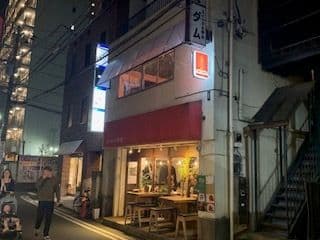
Recommended for small independent shops that want to increase communication with their customers
— Do you have any future plans for the restaurant?
Our place is an ethnic restaurant with the concept of an izakaya (Japanese-style pub), so we serve small plates of snacks from regions like Southeast Asia and Mexico. We haven’t really offered rice dishes so far, but because people often ask things like, “Don’t you have green curry?” or “What about gapao rice?” based on their image of Thai food, we’ve started serving a few of those rice-based dishes as well.
Our place is an ethnic restaurant with the concept of an izakaya (Japanese-style pub), so we serve small plates of snacks from regions like Southeast Asia and Mexico. We haven’t really offered rice dishes so far, but because people often ask things like, “Don’t you have green curry?” or “What about gapao rice?” based on their image of Thai food, we’ve started serving a few of those rice-based dishes as well.
While maintaining our shop’s concept and ideals, we want to listen to our customers’ feedback and strike a good balance, and at the same time take on the challenge of creating menus with an element of surprise and strong impact.
— What kind of stores would you recommend Respo Self-Order for?
I’d especially recommend it for places like ours that want to cut labor costs, or shops run by a small team or a single person. I also think it’s a good fit for small, owner-operated stores where it’s easy to talk with customers across the counter. In small or one-person operations, you can end up spending so much time taking orders and handling payments that it’s hard to secure enough time to actually communicate with customers.
I’d especially recommend it for places like ours that want to cut labor costs, or shops run by a small team or a single person. I also think it’s a good fit for small, owner-operated stores where it’s easy to talk with customers across the counter. In small or one-person operations, you can end up spending so much time taking orders and handling payments that it’s hard to secure enough time to actually communicate with customers.
That’s why we recommend this for stores that want to leave ordering and payment to the system and instead spend more time on casual communication, such as introducing recommended menu items and asking about customers’ preferences.
Store Information
Ethnic Tavern Backyard
Address: 2nd Floor, Mitsumatsu Building, 4-18-16 Taishidō, Setagaya-ku, Tokyo
Phone number: 03-4361-4743
Store details:https://autoreserve.com/restaurants/nc4vHuGdLUuFjquLWMJB
Phone number: 03-4361-4743
Store details:https://autoreserve.com/restaurants/nc4vHuGdLUuFjquLWMJB